
Industrialisation
Learn about the innovations that has heightened the capabilities of fermentation.

Precision Fermentation
Using genetically-engineered microbes to produce specific proteins or molecules.
Precision Fermentation allows scientists to create dairy, eggs and meat products without animal involvement, lessening the impact on the environment.
Perfect Day uses this process to create ProFerm™, a highly functional whey protein that can be used in dairy products such as milk, yogurt, and ice cream. (Perfect Day, 2023)
CRISPR
Clustered Regularly Interspaced Short Palindromic Repeats.
CRISPR is a natural immune system found in bacteria. Bacteria use it to recognize and destroy viruses that attack them by cutting their DNA.
Scientists adapted this system to create a gene-editing technology that works like molecular scissors. It can:
-
Find a specific DNA sequence (like using a search function)
-
Cut the DNA at that spot
-
Add, remove, or replace genetic material
It is a powerful genetic engineering tool that allows scientists to precisely edit DNA in living organisms. This technology can:
-
Boost production yields
-
Make microbes more resistant to stress
-
Allow microbes to produce biologics
(Sarah Chang, 2025)


Circular Economy Integration
Turning waste into resources with microbes.
Circular economy integration refers to designing industrial systems to reduce waste, reuse resources, and recycle materials to create a sustainable loop.
Fermentation of agricultural or food waste creates bioplastics, biofuels, enzymes, and proteins that can replace petroleum-based or animal-based products. This reduces reliance on fossil fuels and lowers industrial waste.
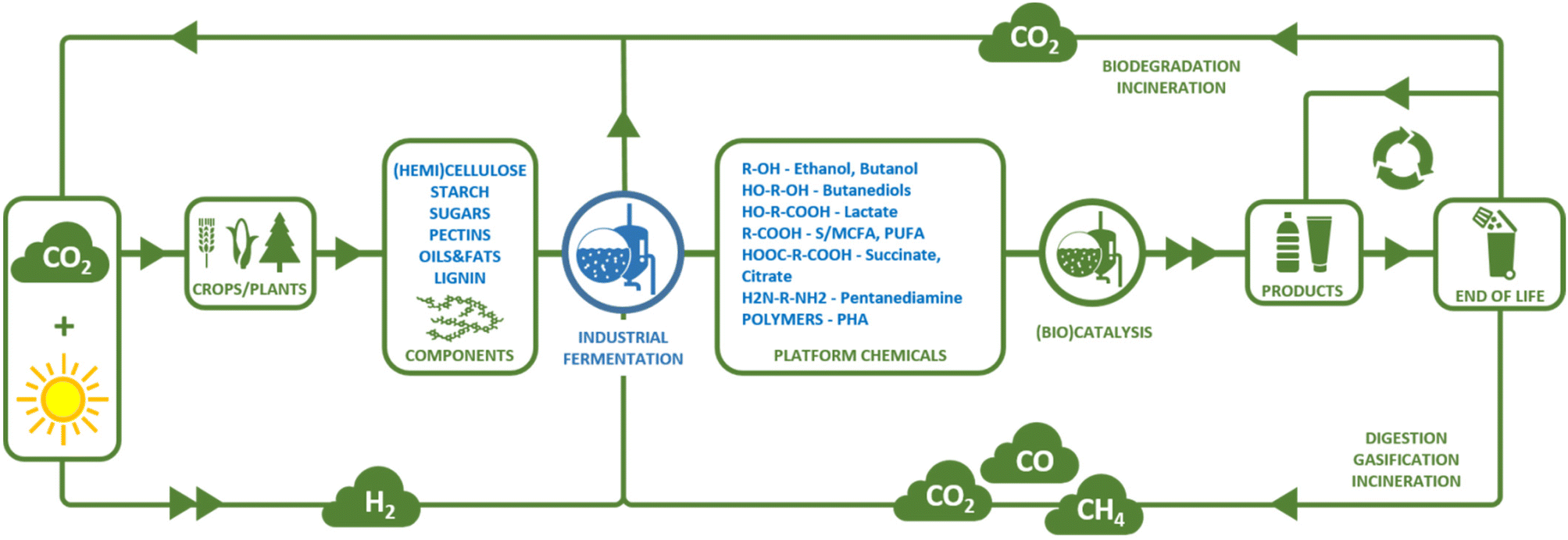
(Tom Ewing et al., 2022)